Kenya / Diaspora communities / Tanzania
The Maasai are a well-known Nilotic people of Kenya and Tanzania, recognised for Maa language, pastoral cattle culture, red shúkà clothing, beadwork, age-set traditions, warrior heritage, jumping dance, strong community values and deep connection to land, livestock and family identity.

Sopa
Hello · Maa
Kaji?
How are you? · Maa
Aiko
I am fine · Maa
Ashe oleng
Thank you · Maa
Karibu
Welcome · Swahili
Habari ya asubuhi
Good morning · Swahili
Oleng / bye
Goodbye · Maa / common usage
Asante
Thank you · Swahili
The Maasai are a Nilotic people mainly found in Kenya and northern Tanzania. They are widely recognised for their pastoral heritage, Maa language, cattle-centred identity, age-set systems, beadwork, red shúkà clothing and strong public cultural presence around parts of the East African savanna.
Maasai identity is closely connected to family, clan, age group, livestock, land, elders, ceremony and community responsibility. Cattle have historically been central to wealth, diet, marriage arrangements, social status and spiritual meaning, although many Maasai people today also live in towns, attend school, work in different professions and participate in modern national life.
Maasai culture is not identical in every family or region. Customs may differ between Kenya and Tanzania, between rural and urban communities, and between families that follow traditional, Christian, modern or mixed practices. Public content should therefore describe broad cultural patterns while recognising variation.
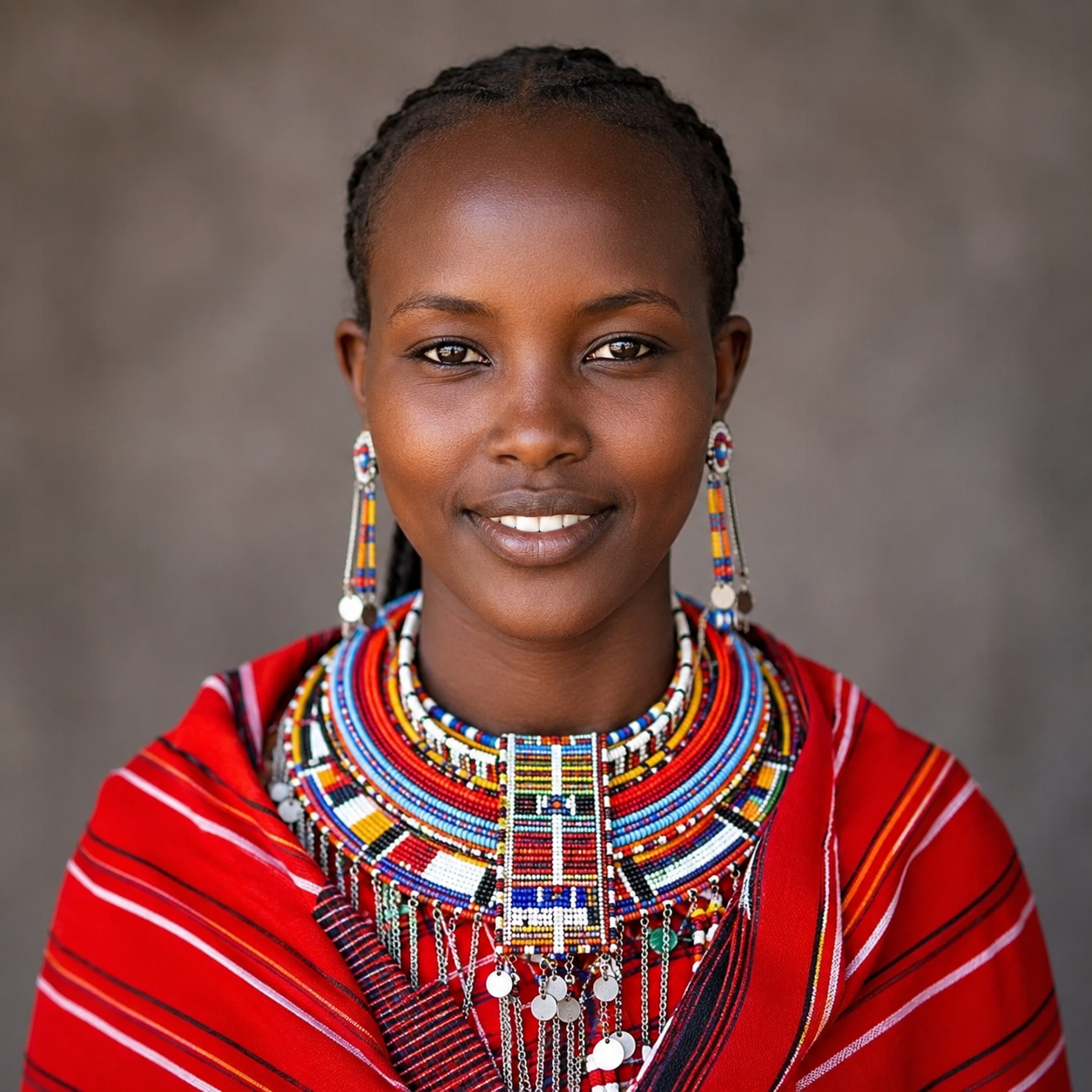
Maasai dress is strongly associated with the shúkà, a wrapped cloth often seen in red, blue, black, checked or striped patterns. Red is especially recognisable and is commonly linked with bravery, visibility and cultural identity. Men may wear the shúkà with sandals, belts, beadwork or ceremonial accessories, while women often wear colourful bead necklaces, earrings, bracelets, head ornaments and wrapped garments.
Beadwork is one of the most important visual markers of Maasai identity. Colours and designs can carry meanings linked to beauty, age, marital status, ceremony, family and community. In modern life, Maasai people may wear everyday contemporary clothing, but cultural dress remains important for ceremonies, tourism, festivals, weddings and community events.
Maasai marriage negotiations often involve bridewealth connected to livestock, especially cattle, although details vary by family, region, religion and modern agreement. The process is normally handled through families and elders rather than only by the couple privately.
Common items or stages may include:
Bridewealth should not be described as buying a woman. Its cultural meaning is more closely linked to family union, respect, commitment, social recognition and the responsibilities created by marriage.
Maasai music and dance are often performed through group singing, call-and-response, rhythmic chanting, body movement and ceremonial performance rather than heavy reliance on many instruments. One of the most recognisable dances is adumu, often called the jumping dance, traditionally associated with young men and age-set gatherings.
Dance and song may be used in ceremonies, rites of passage, celebrations, courtship, warrior-age traditions, blessings and community gatherings. Performances are highly social and can express bravery, unity, identity, beauty, age group pride and respect for tradition.
Traditional Maasai food has been strongly linked to pastoral life and livestock. Common foods include milk, meat, blood in specific traditional contexts, sour milk, fat, maize meal, beans, tea and foods adopted through trade, farming and modern life.
Today Maasai diets vary widely. Many families eat ugali, rice, vegetables, beans, potatoes, chapati, meat stews and tea, depending on location, income, religion, schooling, urbanisation and access to markets. Food remains strongly connected to hospitality, ceremonies, livestock, family responsibility and respect for guests.
Maasai craft traditions are especially known for beadwork, leatherwork, decorative belts, sandals, ornaments, carved items, gourds and ceremonial accessories. Beaded collars, earrings, bracelets and headpieces are among the most visible forms of Maasai art.
Bead colours and arrangements can express beauty, identity, age, marital status, ceremony and community belonging. Crafts are used in daily life, ceremonial life, tourism, gifting and cultural representation. Women are especially associated with beadwork production in many Maasai communities.
Maasai origin traditions often describe movement from the north into the East African rift and savanna regions. Historical accounts commonly connect Maasai-speaking communities with Nilotic migrations into present-day Kenya and Tanzania, where pastoral life, cattle keeping and age-set organisation became central to identity.
Different Maasai sections and families preserve their own histories through elders, oral tradition, place memory, clan identity and age-set narratives. For that reason, Maasai origins should be presented as a broad cultural history rather than one single origin story that applies identically to every household.
The Maasai developed a strong pastoral society in East Africa, especially across areas of present-day Kenya and Tanzania. Cattle, grazing land, mobility, age-set organisation, warrior traditions, elders and clan relationships shaped their social and political life.
During the colonial period, Maasai communities experienced land loss, new boundaries, restrictions on movement and pressure from settler agriculture, game reserves and state administration. These changes affected grazing patterns, settlement, livelihood and political authority.
Today many Maasai people continue pastoral practices while also participating in education, business, conservation, tourism, government, urban employment and modern professional life. Maasai identity remains powerful through language, dress, beadwork, ceremonies, age-set memory, cattle culture and community leadership.
Modern Maasai dating varies widely by family, religion, education, location and personal values. In many families, serious relationships are expected to involve family knowledge, elders and respectful communication rather than remaining only private between the couple.
Common expectations may include respect, maturity, faithfulness, family approval, responsibility, good conduct and understanding of cultural obligations. In more traditional settings, marriage decisions may involve stronger family participation, while urban or highly educated Maasai couples may date more independently.
Because practices differ, content should avoid presenting one courtship pattern as universal for all Maasai people.
Maasai marriage customs are family-centred and commonly involve the participation of elders, family representatives and community recognition. Marriage traditionally creates a relationship between families, not only between two individuals.
Typical elements may include family discussions, elder involvement, agreement on bridewealth, blessings, ceremonial meals, symbolic rituals, and then customary, religious or civil recognition depending on the couple and families. Livestock may be important in bridewealth discussions, but modern agreements can include money or other arrangements.
The process should be described with respect and care. Maasai marriage practices vary by region, religion, education and family preference, so no single list should be treated as compulsory for every household.
Traditional Maasai belief recognises Enkai or Engai as the Supreme Being, often associated with creation, blessing, rain, cattle and moral order. Elders, blessings, sacred speech, livestock and community harmony carry strong cultural significance.
Today many Maasai people are Christian, while some families maintain traditional beliefs or combine Christian practice with selected cultural customs. Beliefs can vary significantly by family and region.
Respect for elders, blessing ceremonies, cattle symbolism, rites of passage, family unity and proper conduct during ceremonies remain culturally important in many Maasai communities.
Traditional Maasai leadership is strongly shaped by elders, age-set organisation, clan relationships and respected community figures. Elders provide guidance in marriage, conflict resolution, land matters, ceremonies, blessings and moral conduct.
Age-set systems historically organised men into stages of life, including youth, warriorhood and elderhood. Although modern education, law, religion and state institutions have changed many practices, elder authority and community consultation remain important in many Maasai settings.
Sensitive areas include disrespecting elders, mocking cultural dress or beadwork, treating bridewealth as a commercial purchase, stereotyping all Maasai people as only pastoralists or warriors, exposing private family negotiations publicly, and speaking carelessly about sacred ceremonies or initiation practices.
Some topics, including initiation, gender roles, conservation conflict, land rights and tourism representation, can be politically and culturally sensitive. Public content should use respectful wording, avoid romanticising poverty or tradition, and recognise that Maasai people live both traditional and modern lives.