South Africa / Botswana / Diaspora communities / Zimbabwe
The Pedi, also known as Bapedi or Northern Sotho, are a Southern African people mainly associated with Limpopo, known for Sepedi language, strong family and clan values, bogadi marriage customs, praise names, initiation traditions, music, dance, food heritage and respect for elders and ancestors.
Dumela
Hello · Sepedi
Dumelang
Hello to more than one person · Sepedi
O kae? / Le kae?
How are you? · Sepedi
Ke gona / Ke phela gabotse
I am fine · Sepedi
Ke a leboga
Thank you · Sepedi
Hle
Please · Sepedi
Šala gabotse
Goodbye / stay well · Sepedi
Sepela gabotse
Goodbye / go well · Sepedi
The Pedi, also known as Bapedi or Northern Sotho, are a Southern African people mainly associated with Limpopo in South Africa. Their main language is Sepedi, which is part of the broader Northern Sotho language cluster.
Pedi identity is connected to family, clan history, respect for elders, cattle, land, praise names, bogadi marriage customs, traditional leadership, music, dance, food traditions and community responsibility. Pedi culture is closely related to other Northern Sotho-speaking communities, but Bapedi history has its own royal, regional and political identity.
Pedi customs are not identical in every family or region. Practices may differ by clan, church, rural or urban setting and generation, so public content should describe broad cultural patterns while recognising variation.
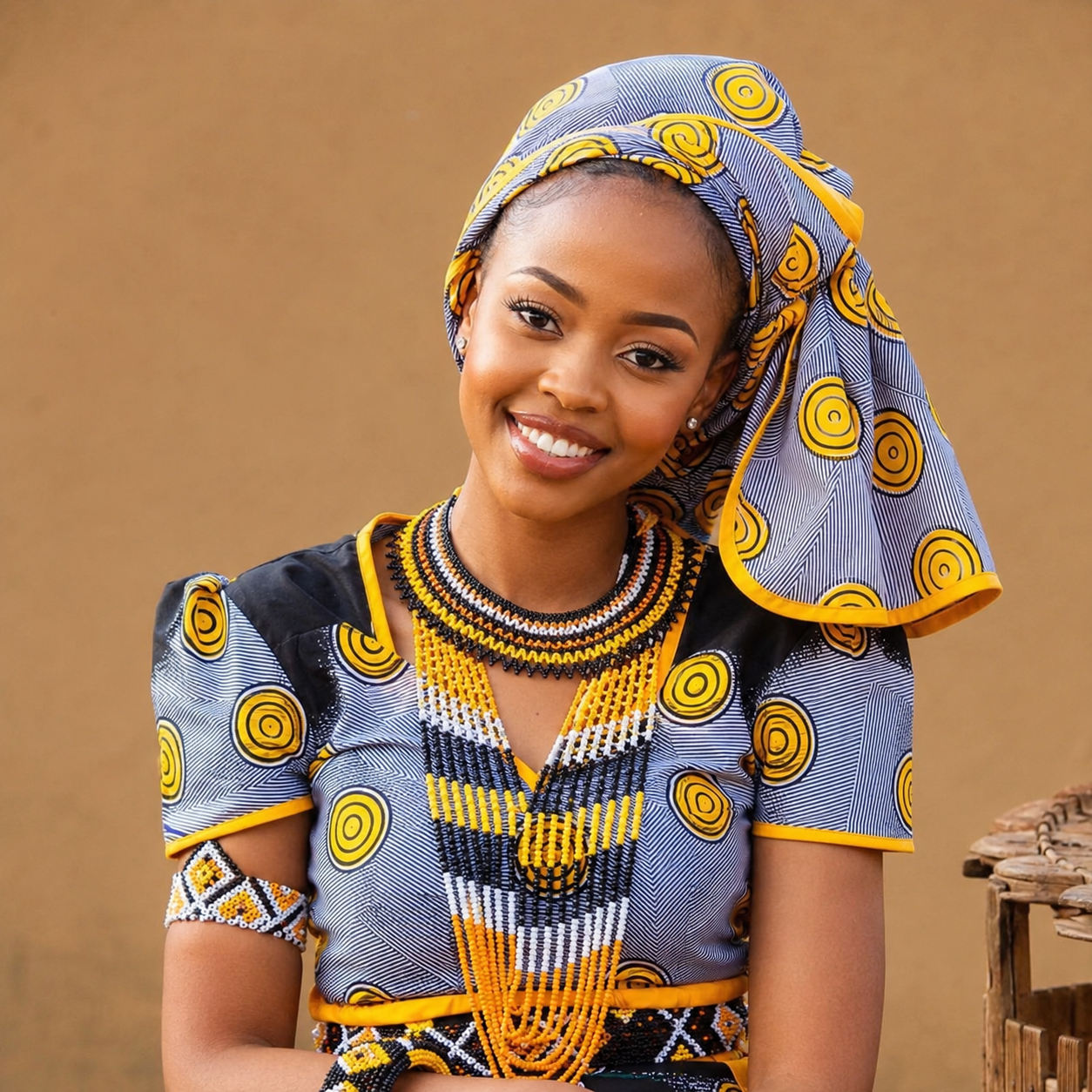
Pedi traditional dress is often colourful and may include leteisi or printed fabrics, pleated skirts, headwraps, shawls, blankets, beads and coordinated family outfits. Women may wear bright dresses, skirts and beadwork for weddings, heritage events and family ceremonies. Men may wear formal clothing, blankets, shirts, hats or cultural accessories depending on the occasion.
Modern Pedi people wear contemporary clothing daily, while traditional dress remains important for weddings, bogadi negotiations, initiations, heritage events, funerals, church gatherings and family ceremonies.
Dress is selected to show dignity, respect for elders, beauty, family pride and connection to heritage.
Pedi customary marriage negotiations are commonly associated with bogadi, the bridewealth process. Traditionally bogadi was linked to cattle, but many families today agree on cattle equivalents, money or a combination of items depending on circumstances.
Common items or stages may include:
Bogadi should not be described as buying a bride. Its cultural meaning is family union, respect, gratitude, social recognition and commitment between households.
Pedi performance traditions include drumming, singing, hand-clapping, footwork, praise poetry and group dance. Cultural dances may be performed at weddings, initiations, heritage events, community celebrations and family ceremonies.
Important performance references include dinaka, sekgapa, praise singing and other Northern Sotho/Pedi dance styles. Dance can express joy, respect, courtship, initiation, community pride, history and social unity.
Common Pedi foods include pap, bogobe, ting, sorghum porridge, maize meal, beans, pumpkin, leafy vegetables, beef, goat, chicken, mopani worms where eaten, traditional bread, tea and fermented drinks in some ceremonial contexts.
Food is closely connected to hospitality, farming, cattle culture, weddings, funerals, initiations and family visits. Serving guests properly is an important sign of respect and care.
Pedi craft traditions include beadwork, pottery, basketry, weaving, mats, blankets, drums, woodwork, leatherwork and household items. Beadwork and colourful fabrics are important visual elements in ceremonial dress and cultural representation.
Crafts may express beauty, identity, family pride, social status, household skill and connection to heritage.
Pedi origins are linked to the wider history of Sotho-Tswana speaking peoples in Southern Africa and to the development of Bapedi authority in the north-eastern interior. Different families and clans preserve their own histories through praise names, totems, royal lineages, elders and home areas.
The Bapedi polity became especially important through royal leadership and regional history around Sekhukhuneland. It is best to describe Pedi identity as both part of the broader Northern Sotho language family and as a specific historical community with its own royal and regional traditions.
Pedi history includes farming, cattle keeping, clan organisation, trade, traditional leadership, regional conflict and the rise of Bapedi authority in what is now Limpopo. Leaders such as Sekhukhune are central to Pedi historical memory.
Colonial expansion, missionary activity, land conflict, labour migration, apartheid, education, Christianity, urbanisation and modern South African democracy all shaped Pedi life.
Today Pedi identity continues through Sepedi language, family customs, bogadi, food, dance, music, churches, traditional leadership, rural homesteads, urban communities and diaspora networks.
Modern Pedi dating varies by family, religion, age, education, location and personal values. In many families, a serious relationship is expected to move toward respectful family knowledge and formal introduction rather than remaining private indefinitely.
Common expectations may include respect, honesty, maturity, faithfulness, financial responsibility, good communication, respect for elders and avoiding behaviour that embarrasses either family. Families may expect formal steps before cohabitation, pregnancy, marriage planning or public recognition of the relationship.
Urban couples may date more independently, but family approval often remains important when the relationship becomes serious.
Pedi marriage customs are family-centred. A serious marriage is not viewed only as a private agreement between two individuals; it creates a relationship between families and extended households.
Typical steps may include private commitment by the couple, family awareness, formal introductions, sending representatives, bogadi negotiations, agreement on cattle or money equivalents, gifts or clothing for relatives, family blessings and then a customary, church or civil ceremony depending on the couple and families.
Practices can differ between clans, churches, regions and individual households. Public content should therefore avoid presenting one family’s bogadi list or ceremony as compulsory for all Bapedi.
Traditional Pedi belief recognises a Supreme Being and gives importance to ancestors, family lineage, moral conduct, elders, rain, cattle and community harmony. Ancestors may be understood as guardians of family memory and moral order.
Today many Pedi people are Christian, while some families maintain selected traditional customs or combine Christian practice with cultural ceremonies. Traditional healing and ancestral respect may still be important in some families, while others follow mainly church-based approaches.
Respect for elders, funeral obligations, family unity, remembrance of the dead, thanksgiving and proper conduct during marriage and family ceremonies remain culturally significant in many Pedi communities.
Traditional Pedi leadership includes kings, chiefs, headmen, elders and senior family representatives. Royal and chiefly structures are important in Pedi history, land identity, dispute resolution, ceremonies and community memory.
At household level, senior relatives guide marriage discussions, funeral arrangements, inheritance matters and family protocols. Leadership is therefore both community-based and family-based, with modern civic, church and state structures also shaping community life today.
Sensitive areas include disrespecting elders, mocking clan names or totems, treating bogadi as a commercial purchase, exposing private family negotiations publicly, dismissing Sepedi language or identity, and confusing Pedi identity with all Northern Sotho communities without recognising local variation.
Initiation customs, royal history, land, chieftainship, ancestral practices and family rituals can be sensitive. Public content should use respectful wording, recognise regional variation and avoid stereotypes.