South Africa / Diaspora communities / Eswatini / Mozambique / Zimbabwe
The Tsonga are a Southern African cultural and language group associated with Xitsonga, family-centred values, lobola marriage customs, xibelani dance, colourful dress, ancestor respect, traditional music, storytelling, food traditions and communities across South Africa, Mozambique, Zimbabwe and Eswatini.

Avuxeni
Hello · Xitsonga
Ku njani?
How are you? · Xitsonga
Ndza ha hanya / Ni kona
I am fine · Xitsonga
Avuxeni
Good morning · Xitsonga
Ndza khensa
Thank you · Xitsonga
Ndza kombela
Please · Xitsonga
Sala kahle
Goodbye / stay well · Common regional usage
Famba kahle
Goodbye / go well · Common regional usage
The Tsonga are a Southern African people mainly associated with South Africa and Mozambique, with communities also found in Zimbabwe, Eswatini and the diaspora. Their main language is Xitsonga, although many Tsonga people also speak other regional languages such as Sepedi, Tshivenda, isiZulu, English, Portuguese or Shangaan-related varieties depending on where they live.
Tsonga identity is connected to language, family, clan history, respect for elders, marriage negotiations, music, dance, storytelling, beadwork, traditional healing, food traditions and community responsibility. In South Africa, Tsonga communities are especially associated with Limpopo, Mpumalanga and Gauteng, while in Mozambique related Tsonga-speaking groups have deep historical connections to the southern regions.
The terms Tsonga and Shangaan are sometimes used together, but they are not always identical in every context. Some people use Shangaan to refer to particular historical, cultural or linguistic identities linked to Gaza/Nguni influence, while others use Tsonga as the broader language and cultural identity. Public content should therefore recognise variation and avoid forcing one label onto every family.
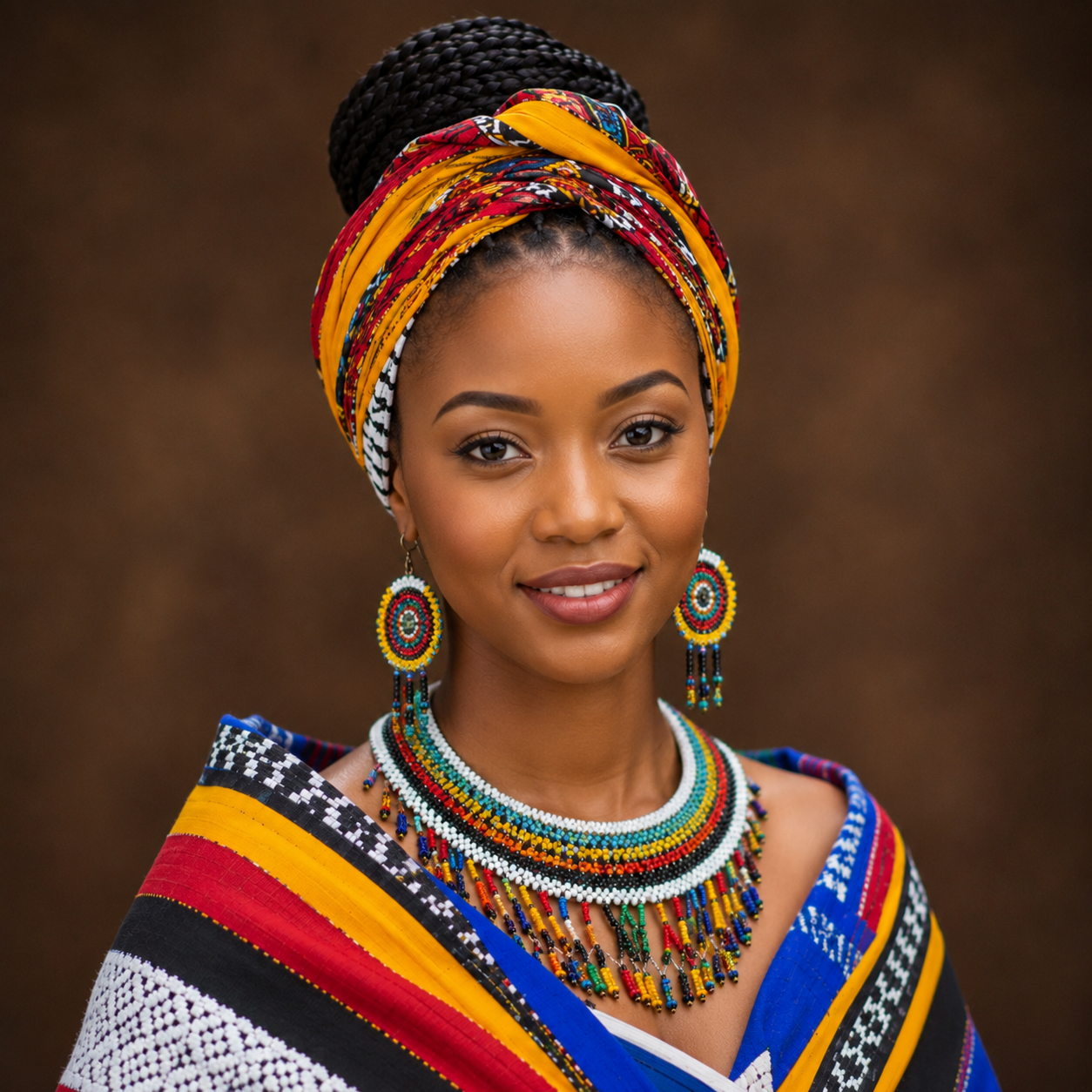
Tsonga traditional dress is often colourful, expressive and closely linked to music and dance. Women are especially associated with xibelani skirts, bright patterned fabrics, beads, headwraps and coordinated outfits used in dance, weddings, festivals and cultural events. The xibelani skirt is designed to move with hip and waist movement during performance.
Men may wear animal-skin inspired garments, printed shirts, sashes, beadwork or formal clothing with cultural accessories during ceremonies and performances. In modern settings, Tsonga people often wear contemporary clothing daily while reserving traditional outfits for weddings, lobola negotiations, festivals, church events, heritage celebrations and family ceremonies.
Clothing is used to express beauty, dignity, identity, celebration and respect for the occasion.
Tsonga customary marriage negotiations commonly involve lobola, traditionally linked to cattle but often represented partly or fully in money today. The details vary by family, country, church, region and agreement, but the process is normally handled through family representatives and elders.
Common items or stages may include:
The exact list should always be confirmed with the families involved. Lobola should be described as respect, gratitude, commitment and family union, not as buying a bride.
Tsonga dance traditions are strongly associated with rhythm, hip movement, footwork, singing, drumming and energetic performance. Xibelani dance is one of the most recognisable Tsonga cultural expressions, especially when women perform in colourful xibelani skirts designed to emphasise movement.
Other performance traditions may include group singing, call-and-response, drumming, clapping, storytelling and celebratory dances at weddings, festivals, initiations, family gatherings and public cultural events. Dance can express joy, beauty, courtship, identity, social unity and respect for tradition.
Modern Tsonga music and dance also influence popular culture through genres, stage performances and contemporary artists who blend traditional rhythms with gospel, house, Afro-pop and other styles.
Common Tsonga foods include pap or vuswa, maize meal porridge, beans, vegetables, pumpkin, leafy greens, groundnuts, chicken, beef, goat, fish in some regions, mopani worms where eaten, and spicy relishes. In Mozambique-linked communities, maize, cassava, rice, fish, coconut-influenced dishes and seafood may also be part of local food traditions.
Tsonga cuisine is strongly connected to household farming, family gatherings, hospitality and ceremony. Serving guests properly at weddings, funerals, lobola meetings and family visits is an important sign of respect and care.
Tsonga craft traditions include beadwork, basketry, wood carving, pottery, mat weaving, decorated clothing, xibelani skirts, musical instruments and household items. Beads, bright fabrics and patterned designs are important in ceremonial dress and dance presentation.
Crafts may express beauty, identity, family pride, ceremony, social status, creativity and regional style. Many Tsonga visual traditions are strongly connected to performance, especially clothing and accessories designed for movement, rhythm and public celebration.
Tsonga origins are linked to a wider history of Bantu-speaking communities in south-eastern Africa, especially across present-day Mozambique, South Africa, Zimbabwe and Eswatini. Tsonga-speaking communities developed through migration, trade, settlement, intermarriage and interaction with neighbouring peoples over many centuries.
The term Shangaan is associated by many people with the Gaza kingdom and the influence of Soshangane, whose followers and political networks shaped parts of southern Mozambique and nearby regions. However, not every Tsonga family identifies as Shangaan in the same way, and Tsonga identity is broader than one political history.
Different families preserve their own origin stories through surnames, praise names, clan histories, elders and home areas. It is therefore best to present Tsonga identity as a broad cultural and language identity with regional variation.
Tsonga-speaking communities have long histories in south-eastern Africa, including farming, fishing in some regions, trade, clan organisation, family settlement, music, healing practices and interaction with neighbouring groups. Their history includes communities in southern Mozambique and later strong settlement in present-day South Africa, especially Limpopo and Mpumalanga.
The nineteenth-century Gaza kingdom and Nguni influence shaped parts of Tsonga/Shangaan history, especially through political organisation, military influence, migration and identity formation. Colonial borders later divided related communities between Mozambique, South Africa, Zimbabwe and Eswatini.
Modern Tsonga life has been shaped by labour migration, mission education, Christianity, apartheid-era homeland systems, urbanisation, cross-border family networks and contemporary South African and Mozambican national life. Today Tsonga identity continues through Xitsonga language, music, dance, family customs, food, dress, churches and diaspora communities.
Modern Tsonga dating varies by family, religion, age, education, location and personal values. In many families, a serious relationship is expected to move toward respectful family knowledge and formal introduction rather than remaining private indefinitely.
Common expectations may include respect, honesty, maturity, faithfulness, financial responsibility, good communication, respect for elders and avoiding behaviour that embarrasses either family. Families may expect formal steps before cohabitation, pregnancy, marriage planning or public recognition of the relationship.
Urban couples may date more independently, but family approval often remains important when the relationship becomes serious. Church expectations may also shape dating and marriage decisions in many families.
Tsonga marriage customs are family-centred. A serious marriage is not viewed only as a private agreement between two individuals; it creates a relationship between families and extended households.
Typical steps may include private commitment by the couple, family awareness, formal introductions, sending representatives, lobola negotiations, agreement on cattle or money equivalents, gifts or clothing for relatives, family blessings and then a customary, church or civil ceremony depending on the couple and families.
Practices can differ between South African Tsonga, Mozambican Tsonga/Shangaan, churches, regions and individual households. Public content should therefore avoid presenting one family’s lobola list or ceremony as compulsory for all Tsonga people.
Traditional Tsonga belief recognises a Supreme Being and gives importance to ancestors, family lineage, moral conduct, elders, spiritual protection and healing practices. Ancestors may be understood as guardians of family memory, moral order and belonging.
Today many Tsonga people are Christian, while some families maintain selected traditional customs or combine Christian practice with cultural ceremonies. Traditional healers and spiritual practices may still be important in some families, while others follow mainly church-based approaches.
Respect for elders, funeral obligations, family unity, remembrance of the dead, healing, thanksgiving and proper conduct during marriage and family ceremonies remain culturally significant in many Tsonga communities.
Traditional Tsonga leadership may include chiefs, headmen, elders, healers and senior family representatives. Leaders help preserve family order, land history, dispute resolution, cultural protocols, ceremonies and community memory.
At household level, senior relatives often guide marriage discussions, funeral arrangements, inheritance matters, family rituals and decisions involving children or extended family. Leadership is therefore both community-based and family-based, with modern civic, church and state structures also influencing how communities are organised today.
Sensitive areas include disrespecting elders, mocking Xitsonga language or accents, treating lobola as a commercial purchase, exposing private family negotiations publicly, dismissing traditional healing practices, and confusing Tsonga and Shangaan identities as if every family uses the labels in the same way.
Initiation customs, healing, ancestor practices, gender roles, cross-border identity and ethnic labels can be sensitive. Public content should use respectful wording, recognise regional variation and avoid stereotypes that reduce Tsonga culture only to dance or colourful clothing.